
Resistor Color Code CalculatorDecode resistor values from color bands with visual selector for 4-band and 5-band resistors.


Resistor Color Code Calculator
Decode resistor values from color bands with visual selector for 4-band and 5-band resistors.
Select Band Type
Choose between 4-band or 5-band resistor.
Click Color Bands
Select colors for each band using the visual color picker.
Read Resistance
See the decoded resistance value, tolerance, and range.
What Is Resistor Color Code Calculator?
The Resistor Color Code Calculator decodes the color bands on through-hole resistors to determine their resistance value and tolerance. It supports both 4-band resistors (2 digit bands + multiplier + tolerance) and 5-band resistors (3 digit bands + multiplier + tolerance). The visual interface lets you click on color swatches to select each band, and displays a visual representation of the resistor with your selected colors. The calculator shows the nominal resistance value with appropriate units (Ω, kΩ, MΩ), the tolerance percentage, and the minimum/maximum resistance range.
Why Use Our Resistor Color Code Calculator?
- Visual color band selector — no memorization needed
- Supports both 4-band and 5-band resistors
- Shows tolerance range (minimum to maximum resistance)
- Visual resistor display updates in real-time
Common Use Cases
Electronics Hobbyists
Quickly decode resistor values when building circuits.
Education
Learn the resistor color code system interactively.
Repair & Maintenance
Identify resistor values during electronic repair work.
Component Sorting
Verify resistor values when organizing component inventory.
Technical Guide
The resistor color code assigns numeric values to colors: Black=0, Brown=1, Red=2, Orange=3, Yellow=4, Green=5, Blue=6, Violet=7, Grey=8, White=9. For 4-band: Value = (Band1×10 + Band2) × Multiplier. For 5-band: Value = (Band1×100 + Band2×10 + Band3) × Multiplier. Multiplier colors: Black=×1, Brown=×10, Red=×100, up to White=×10⁹, Gold=×0.1, Silver=×0.01. Tolerance colors: Brown=±1%, Red=±2%, Green=±0.5%, Blue=±0.25%, Violet=±0.1%, Grey=±0.05%, Gold=±5%, Silver=±10%.
Tips & Best Practices
- 1The tolerance band is usually spaced slightly apart from the others
- 2Hold the resistor with the tolerance band on the right to read left-to-right
- 3Gold and silver are only used for multiplier and tolerance bands, never for digits
- 45-band resistors are typically precision components (1% or better tolerance)
Related Tools


Ohm's Law Calculator
Calculate voltage, current, resistance, or power using Ohm's Law and the power equation.
 Math & Calculators
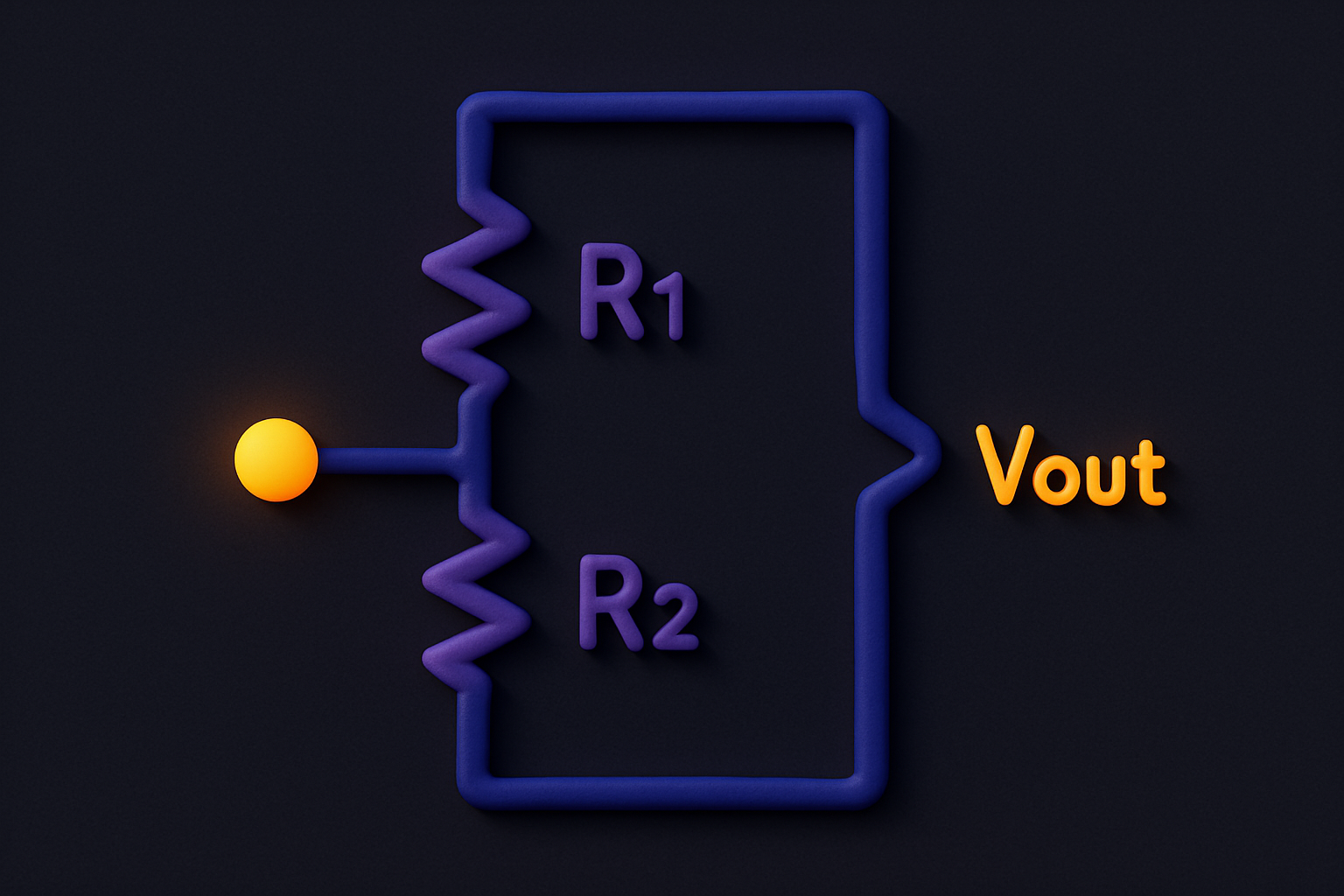
Voltage Divider Calculator
Calculate output voltage or required resistor value for voltage divider circuits.
Math & Calculators

Power Calculator (Electrical)
Calculate electrical power, voltage, current, or resistance using power equations.
Math & Calculators

Number Base Converter
Convert numbers between any bases from 2 to 36, including binary, octal, decimal, and hex.
Math & Calculators

Percentage Calculator
Calculate percentages, percentage change, and what percent one number is of another.
Math & Calculators

Fraction Calculator
Add, subtract, multiply, and divide fractions with automatic simplification.
Math & CalculatorsFrequently Asked Questions
QHow do I tell which end to read from?
QWhat is the difference between 4-band and 5-band?
QWhat does the tolerance mean?
QAre there 6-band resistors?
QCan I use this for SMD resistors?
About Resistor Color Code Calculator
Resistor Color Code Calculator is a free online tool from FreeToolkit.ai. All processing happens directly in your browser — your data never leaves your device. No registration required. No ads. Just fast, reliable tools.