
Weighted Average CalculatorCalculate weighted averages with dynamic data entry, showing both weighted and simple averages.


Weighted Average Calculator
Calculate weighted averages with dynamic data entry, showing both weighted and simple averages.
Enter Values
Input values and their corresponding weights.
Add More Items
Click + to add additional value-weight pairs.
View Results
See weighted average, simple average, and total weights.
What Is Weighted Average Calculator?
The Weighted Average Calculator computes the weighted mean of a set of values where each value has an associated weight or importance factor. Unlike a simple average where all values contribute equally, a weighted average gives more influence to values with higher weights. This is used extensively in finance (portfolio returns), academics (GPA), statistics (survey data), and many other fields. The calculator shows both the weighted and simple averages for comparison, plus total weights and the sum of value × weight products.
Why Use Our Weighted Average Calculator?
- Dynamic addition and removal of value-weight pairs
- Shows both weighted and simple averages for comparison
- Displays formula and calculation breakdown
- Useful across academics, finance, statistics, and engineering
Common Use Cases
Academics
Calculate weighted course grades or GPA from credit-weighted courses.
Finance
Compute weighted average cost of capital (WACC) or portfolio returns.
Statistics
Calculate weighted means for survey data with different sample sizes.
Engineering
Compute weighted material properties or performance metrics.
Technical Guide
The weighted average formula is: x̄_w = Σ(xᵢ × wᵢ) / Σ(wᵢ), where xᵢ are the values and wᵢ are the weights. The simple average is: x̄ = Σ(xᵢ) / n. When all weights are equal, the weighted average equals the simple average. Weights do not need to sum to 1 or 100 — they represent relative importance. The calculator normalizes weights internally. Common applications include WACC = Σ(component_cost × component_weight), GPA = Σ(grade_point × credits) / Σ(credits), and survey means = Σ(response × sample_size) / Σ(sample_size).
Tips & Best Practices
- 1Weights represent relative importance — they do not need to sum to 100
- 2When all weights are equal, weighted average equals simple average
- 3Higher weights give more influence to those values in the final result
- 4Useful for combining averages from groups of different sizes
Related Tools
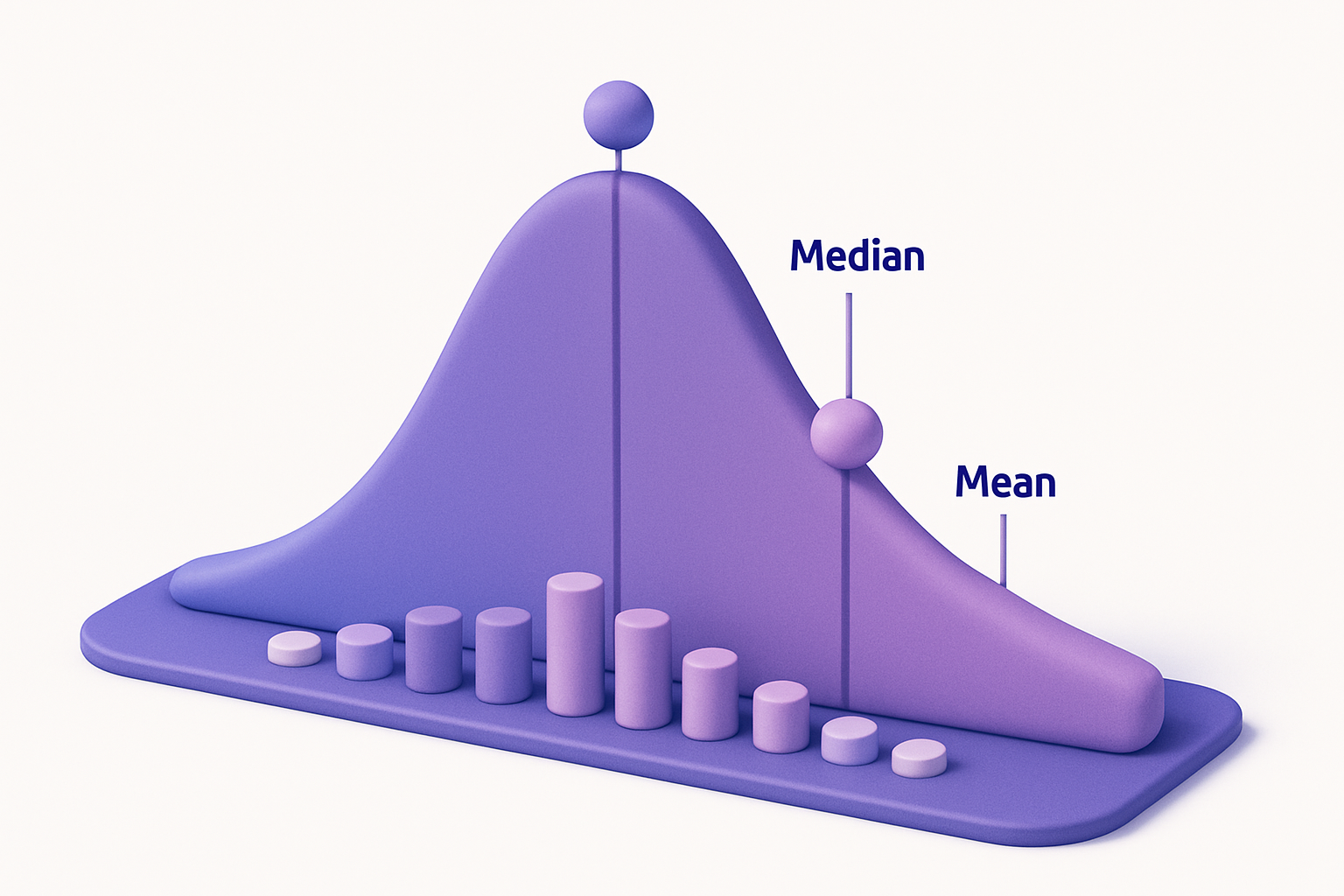
Mean, Median & Mode Calculator
Calculate mean, median, mode, range, and other central tendency measures for any dataset.
 Math & Calculators

GPA Calculator
Calculate your GPA on a 4.0 scale with support for multiple courses, credits, and letter grades.
Math & Calculators

Grade Calculator
Calculate final grades from weighted scores or find the score needed on a final exam.
Math & Calculators

Percentage Calculator
Calculate percentages, percentage change, and what percent one number is of another.
Math & Calculators

Fraction Calculator
Add, subtract, multiply, and divide fractions with automatic simplification.
Math & Calculators

Scientific Calculator
Full-featured scientific calculator with trigonometry, logarithms, factorials, and more.
Math & CalculatorsFrequently Asked Questions
QWhat is the difference between weighted and simple average?
QDo weights need to add up to 100?
QWhen should I use a weighted average?
QWhat happens if all weights are equal?
QCan weights be negative?
About Weighted Average Calculator
Weighted Average Calculator is a free online tool from FreeToolkit.ai. All processing happens directly in your browser — your data never leaves your device. No registration required. No ads. Just fast, reliable tools.