
Volume CalculatorCalculate volume and surface area of 8 3D shapes — cube, sphere, cylinder, cone, and more.
Volume Calculator
Calculate volume and surface area of 8 3D shapes — cube, sphere, cylinder, cone, and more.
Select 3D Shape
Choose from 8 three-dimensional shapes.
Enter Dimensions
Input the required measurements for your chosen shape.
View Results
See the calculated volume, surface area, and formula.
What Is Volume Calculator?
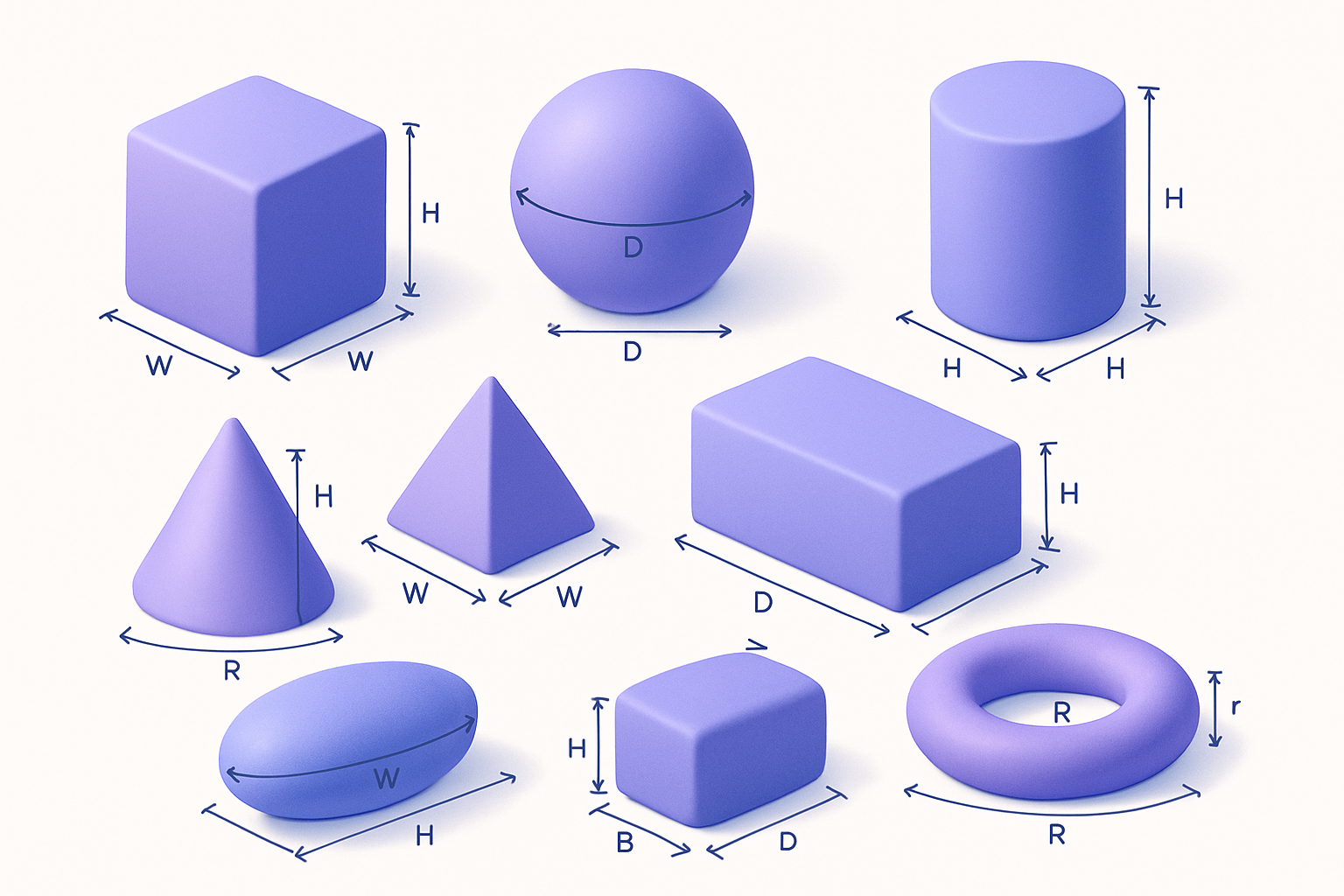
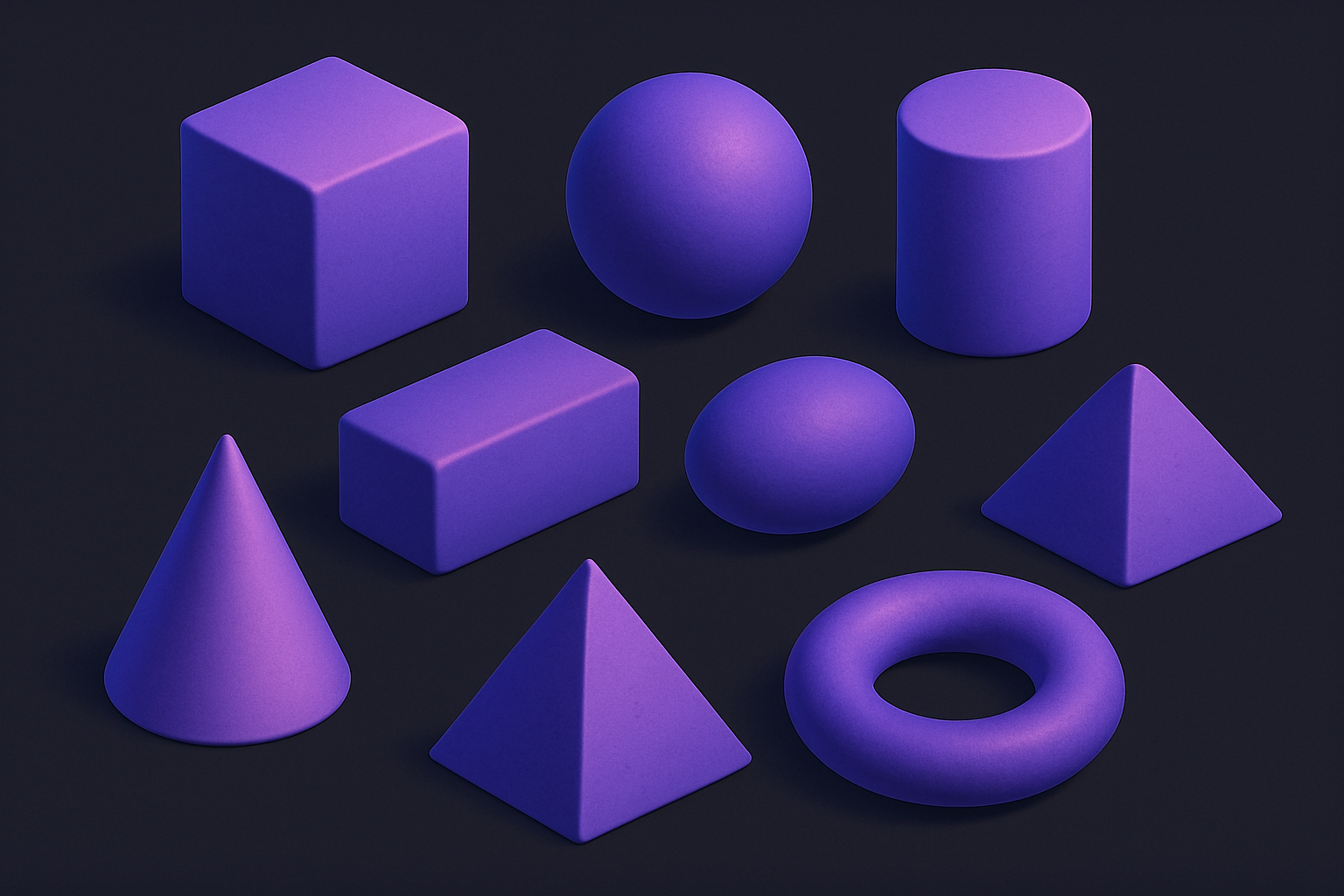
The Volume Calculator computes the volume and surface area of eight common three-dimensional shapes: cube, rectangular box, sphere, cylinder, cone, rectangular pyramid, ellipsoid, and torus. Select a shape, choose your unit of measurement, and enter the required dimensions. The calculator shows the volume in cubic units, the surface area in square units, and the formula used. This tool is essential for engineering, construction, shipping, and any task requiring 3D measurements.
Why Use Our Volume Calculator?
- Eight 3D shapes including advanced forms (ellipsoid, torus)
- Shows both volume and surface area
- Multiple unit options (mm to yards)
- Displays the formula used for each shape
Common Use Cases
Shipping & Packaging
Calculate box volumes for shipping cost estimation.
Construction
Determine concrete, soil, or fill material volumes.
Manufacturing
Calculate material volumes for casting, molding, and machining.
Education
Solve 3D geometry problems and verify calculations.
Technical Guide
Volume formulas: Cube: V = a³, SA = 6a². Box: V = lwh, SA = 2(lw+wh+lh). Sphere: V = (4/3)πr³, SA = 4πr². Cylinder: V = πr²h, SA = 2πr(r+h). Cone: V = (1/3)πr²h, SA = πr(r+√(r²+h²)). Pyramid: V = (1/3)lwh. Ellipsoid: V = (4/3)πabc, SA ≈ Knud Thomsen approximation. Torus: V = 2π²Rr², SA = 4π²Rr, where R is the major radius and r is the minor (tube) radius. Surface area of the ellipsoid uses the approximate formula with exponent 1.6075 for accuracy.
Tips & Best Practices
- 1Volume is in cubic units: if inputs are in cm, output is in cm³
- 2A sphere has the minimum surface area for a given volume among all 3D shapes
- 3For irregular objects, water displacement is often the easiest volume measurement method
- 4Surface area determines material needed for wrapping, painting, or coating
Related Tools

Area Calculator
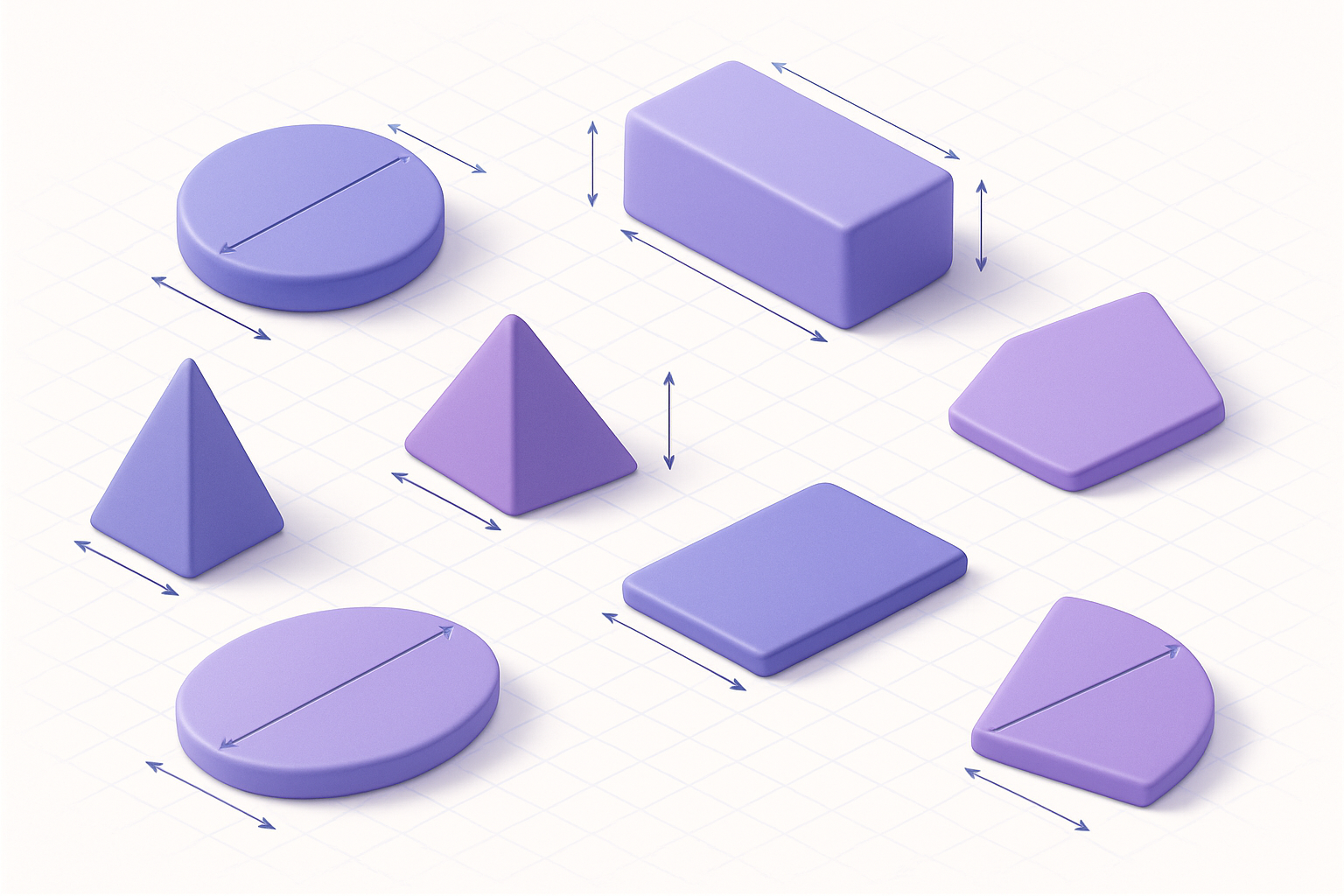
Calculate area and perimeter for 8 shapes — rectangle, circle, triangle, trapezoid, and more.
 Math & Calculators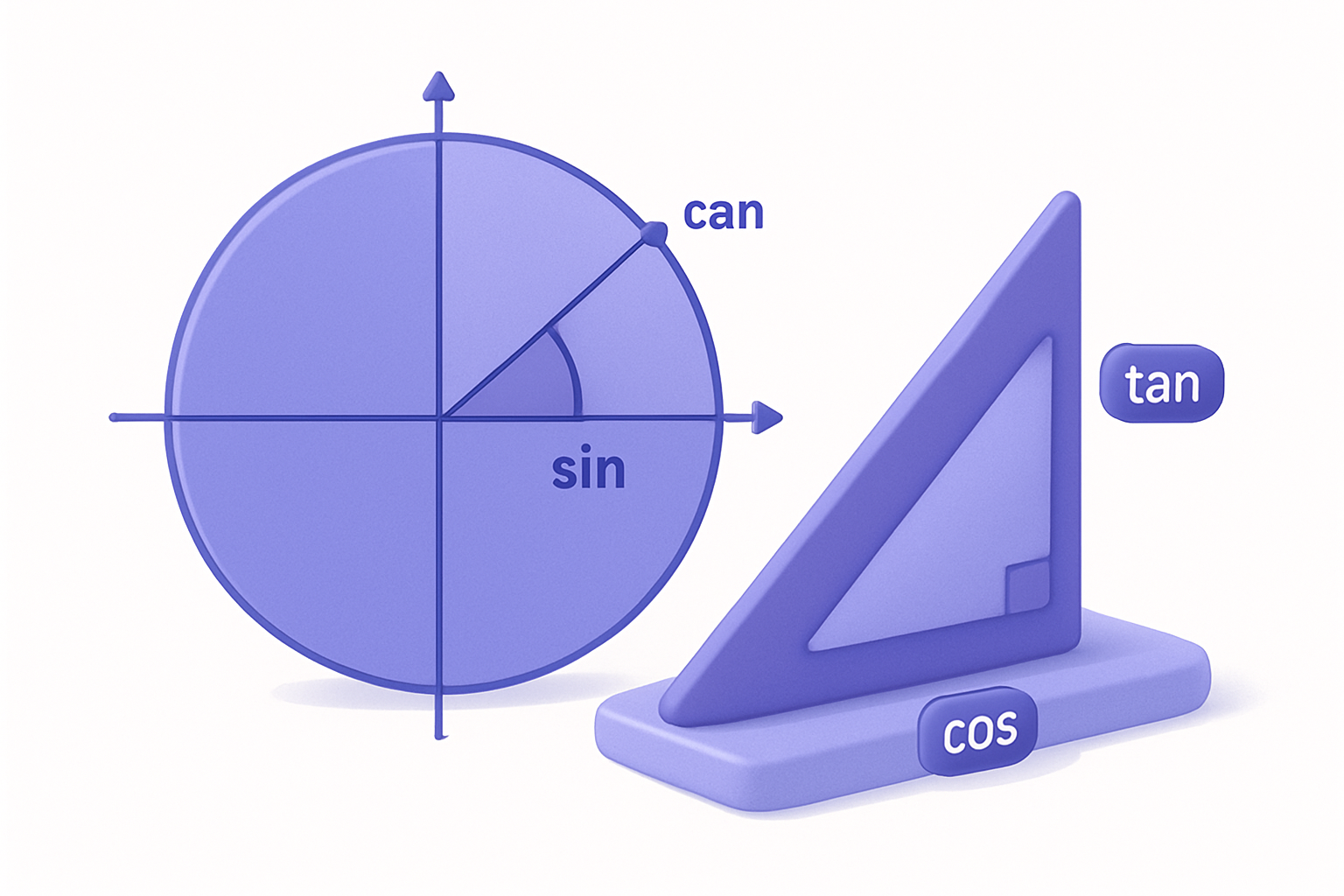
Trigonometry Calculator
Calculate all six trig functions (sin, cos, tan, csc, sec, cot) and inverse trig functions.
Math & Calculators
Percentage Calculator
Calculate percentages, percentage change, and what percent one number is of another.
Math & Calculators
Scientific Calculator
Full-featured scientific calculator with trigonometry, logarithms, factorials, and more.
Math & Calculators
Fraction Calculator
Add, subtract, multiply, and divide fractions with automatic simplification.
Math & Calculators

Matrix Calculator
Perform matrix operations: add, multiply, find determinant, inverse, and transpose for 2×2 and 3×3 matrices.
Math & CalculatorsFrequently Asked Questions
QHow do I convert cubic centimeters to liters?
QHow do I calculate the volume of an irregular shape?
QWhat is the difference between volume and capacity?
QHow much concrete do I need?
QWhat is a torus?
About Volume Calculator
Volume Calculator is a free online tool from FreeToolkit.ai. All processing happens directly in your browser — your data never leaves your device. No registration required. No ads. Just fast, reliable tools.